
Your BMS could be costing you hundreds or thousands of pounds per month
Building Management Systems (BMS) are often installed with the promise of improving energy efficiency and comfort. But once the system is up and running, how often do you tune or review those initial settings?
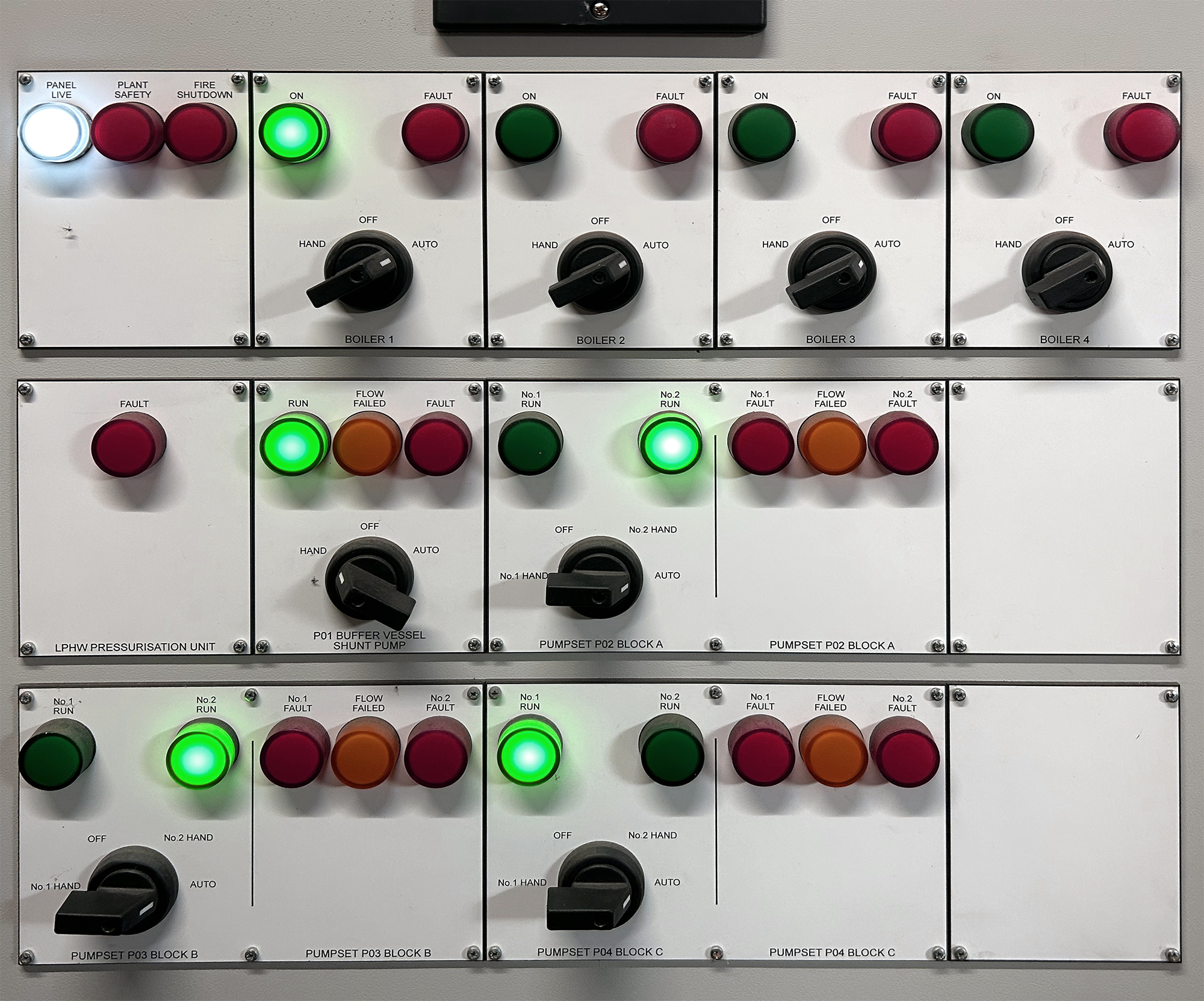
For many commercial and public buildings in the UK – from schools and hospitals to universities, hotels, and even district heat networks - the BMS tends to be a 'fit and forget' component. In other words, it gets commissioned with certain setpoints when built or handed over, and then rarely revisited for optimisation.
The result?
Your silent BMS could be quietly draining hundreds or even thousands of pounds each month in unnecessary energy costs without you realising. In this post, we’ll explore how a neglected BMS leads to wasted energy, why it happens, and what you can do about it.
In this post, we’ll explore how a neglected BMS leads to wasted energy, why it happens, and what you can do about it.
The 'Fit & Forget' problem in building management systems
Many building operators assume that once a BMS is installed or upgraded, the building will automatically run efficiently. Unfortunately, this is usually not the case. BMS controls and setpoints are often left exactly as they were on day one, even as the building’s usage or needs change over time. In practice, these systems are rarely fine-tuned using the buildings own performance data, and they can even be mis-programmed from the start. Without regular attention, building control systems may drift or become out-of-sync with actual occupancy patterns, causing significant inefficiencies.
If your BMS is still running the same settings it had on day one, it’s likely wasting energy:
- Overly broad schedules: HVAC may run 7am–7pm, even if staff arrive at 9 and leave at 5. A simple schedule adjustment can cut hours of daily runtime.
- Static setpoints: Even a 1°C difference can increase heating or cooling energy use by around 10%. Many buildings heat to 22–23°C when 20–21°C would be sufficient.
- Seasonal oversights: Daylight saving time, holiday periods, and shoulder seasons are often ignored — causing lighting or HVAC systems to run longer than needed.
We have found buildings still operating on their initial commissioning settings from a decade earlier. Re-commissioning and tweaking just the heating start/stop times led to noticeable energy and cost reductions.
Manual overrides & always-on equipment: the hidden energy hog
If you step into the plant room of many facilities, you’ll find a familiar sight: BMS control panels with switches flipped to the ‘Hand’ mode – meaning manual override – and indicator lights glowing steady. Such manual overrides bypass the BMS automated schedules, often leaving equipment running 24/7 and racking up energy bills.
We commonly find plant rooms where boilers and pumps are all left in ‘Hand’ – running 24/7. Clients are often unaware, and the unnecessary energy use was costs thousands per year. Fixing the controls returns full automation, with payback in under twelve months.
Manual overrides are often intended as temporary fixes, but without follow-up, they become permanent energy liabilities.
If you operate a building with a BMS then visit your plant room and look at the control panels. If you see multiple switches on ‘Hand,’ it’s worth investigating.
Lack of BMS expertise = lack of optimisation
Why do so many BMS go un-optimised? One big reason is the ‘people factor’. Many organisations lack in-house expertise or dedicated time to manage the BMS beyond reacting to alarms or complaints. In some cases, the only person who knew how the system was set up may have moved on, or the controls contractor handed over a complex system with minimal training. The result: the BMS is often underutilised and essentially treated as a glorified time-clock rather than an active energy management tool.
Most facility managers aren’t fully trained in interpreting BMS data or fine-tuning control strategies. The BMS might be generating alarms or trend logs full of clues about inefficiencies – but if no one on staff has the time or know-how to delve into them, those insights go untapped. Mountains of data alone don’t save energy without analysis, while BMS generate enormous volumes of data, many facilities underutilise this data, missing opportunities to spot and fix inefficiencies. It’s not uncommon for decisions to be made based on habit (‘we always start the boilers at 6am’) instead of what the data shows about actual building heat-up times or occupancy patterns.
All this boils down to a simple truth: if nobody is actively in charge of optimising the BMS, it will not optimise itself. The system might be left ‘as-is’ for years, quietly deviating from optimal settings. A BMS needs periodic expert attention. Whether that means training your team or hiring specialists, the investment can pay off very quickly in energy savings.
Real-world energy waste: common BMS issues
Here are typical signs that your BMS may be wasting energy:
1. HVAC running out of hours
Buildings often heat and cool spaces long before or after occupancy. If your HVAC system starts hours early ‘just to be safe’, you may be wasting a significant amount of energy.
2. Simultaneous heating & cooling
This classic BMS fault occurs when zones fight each other – for example, one area calling for cooling while another calls for heat. It’s usually caused by:
- Overlapping setpoints (no deadband)
- Poor zoning or sensor placement
- Default logic from commissioning
3. Over-generous setpoints
Every extra degree of heating or cooling comes at a cost. Yet it’s common to find thermostats set to 23-24°C in winter and chilled water setpoints too low in summer.
4. Sensor drift or failure
If temperature or occupancy sensors aren’t calibrated regularly, they can misreport data – causing systems to turn on too early or stay on too long.
5. Manual bypass & forgotten overrides
Manual settings can override your automation – rendering your BMS useless for that system.
The bottom line: a BMS left on autopilot tends toward inefficiency over time. Buildings change, sensors age, and people override things. It takes active management to keep the system optimised. If you haven’t looked for these issues in your facility, there could be substantial savings hiding in plain sight.

The payback: optimising your BMS Is worth It
The good news is that tackling these BMS issues can have an immediate and substantial impact on your energy bills. Real-world projects have repeatedly shown double-digit percentage energy savings just by optimising controls, often with very low capital investment. For example:
- Huge savings with minor tweaks: small setpoint changes can lead to big energy savings. Day one setpoints that have been in place for ten years can be calling plant to run too often and too hot.
- 30% efficiency gains with advanced controls: if your building’s controls haven’t been updated or reviewed in years, there may be a big efficiency gap between your current operation and what’s achievable with today’s best practices. Even without new hardware, re-commissioning and updating control logic can capture a lot of this gap.
- Quick return on investment: we often find that correcting control issues pays back extremely fast. Fixing overrides often leads to an ROI in less than twelve months. Updating setpoints based on performance data can achieve similar results. Comfort can also improve when the system is working as intended (no more stuffy rooms from over-run HVAC, or cold complaints from mis-set schedules).
- Avoiding expensive expansions or upgrades: before you invest in new boilers, chillers, or additional HVAC capacity because the building ‘just isn’t performing,’ consider optimising your BMS. It’s quite possible the existing plant is more than enough, but is being controlled poorly. Tuning the control sequences could free up capacity, reduce runtime, and extend equipment life – saving capital and maintenance costs.
Given today’s high energy prices and the push for carbon reduction, ignoring BMS optimisation is like leaving money on the table every month. It’s one of the most cost-effective measures you can take in an existing building. And unlike some energy projects, which might inconvenience building occupants, BMS improvements are largely behind-the-scenes. The occupants may only notice that everything works better – consistent temperatures, no more overheated corridors, etc.
Don’t set & forget - take action now
If this sounds familiar to you, don’t be discouraged – you’re not alone, but you can take action.
At Tabas we work with clients to review their BMS system and strategy and fine tune for optimum performance according to comfort requirements. We can also overlay an Energy Management System onto your existing BMS to provide faster insights into your buildings performance data along with continuous improvement and savings. We provide the technical know-how to transform your BMS from a sleeping giant into an active energy-saving ally.
It’s time to turn 'fit & forge' into 'fit & fine-tune'
Every month you delay could be another few hundred (or thousand) pounds wasted – so let’s fix that. Contact Tabas today to discuss how we can help optimise your BMS and start delivering real savings for your facility. Your energy budget will thank you, and you’ll be one step closer to a smarter, more efficient building.

When managing HVAC building services, choosing the right communication protocol for your Building Management System (BMS) isn’t just a technical detail – it’s a strategic decision. And if you’re a building manager, facilities professional, asset manager, or sustainability lead, there’s one protocol that stands out from the rest: BACnet/IP.

Ofgem’s Heat Network Regulations: What They Mean for Heat Suppliers The UK heat network sector is about to undergo a significant regulatory transformation. From April 2025, Ofgem has begun overseeing heat networks, with full regulatory powers coming into force by January 2026.
Book an introductory call
Want to understand in more detail how we can help you to save money on heating then please book an introductory call with us.